

Ever tried to fit a tallboy Coke into a cup holder built for a regular can? It doesn’t work, and there’s a reason for that.
Coke can dimensions affect everything from your fridge shelf to your car’s console. The standard 12 oz Coke can measures 4.83 inches (12.27 cm) tall, with a 2.60-inch (6.60 cm) diameter and approximately 8.17 inches (20.75 cm) around.
This guide breaks down the exact Coke can size, height, diameter, and volume for every common format. You’ll also see how U.S. cans compare with Coke cans sold in Europe and Australia.
By the end, you’ll know exactly which can fits where and how each size differs.
Coca-Cola Can Dimensions at a Glance
| Format | Height | Diameter | Volume | Ideal For |
|---|---|---|---|---|
| Mini (7.5 oz) | 4.2 in (10.67 cm) | 2.6 in (6.6 cm) | 222 ml | Portion control, kids |
| Standard (12 oz) | 4.83 in (12.3 cm) | 2.6 in (6.6 cm) | 355 ml | Everyday drinking |
| Slim (12 oz) | 6.125 in (15.56 cm) | 2.25 in (5.72 cm) | 355 ml | Sleek grip, cup holders |
| Tall Boy (16 oz) | 6.2 in (15.75 cm) | 2.7 in (6.86 cm) | 473 ml | Longer sessions, more value |
| Large (20 oz) | 7.5 in (19.05 cm) | 2.87 in (7.29 cm) | 591 ml | Gas station grab and go |
| 330 ml (Europe) | 4.75 in (12.07 cm) | 2.6 in (6.6 cm) | 330 ml | European standard |
| 375 ml (Australia) | 5.11 in (12.98 cm) | 2.6 in (6.6 cm) | 375 ml | Australian market |
| 250 ml (Compact) | 3.94 in (10 cm) | 2.13 in (5.4 cm) | 250 ml | Travel, mixed drinks |
This chart pulls every Coca-Cola size into one place, so you don’t have to jump between sections to compare. Match your can type to its exact height, width, and volume before you plan storage, packaging, or a quick label design.
Standard Coke Can Dimensions in the USA
The 12 oz can is the shape most Americans picture when they hear the word “Coke.” It’s been the go-to soda can size since Coca-Cola shifted to canned packaging decades ago, and the fluid ounces measurement stuck even as other countries moved to metric.
12 oz Coke Can Height and Diameter
A standard Coke can stands 4.83 inches tall (12.3 cm) and measures 2.6 inches (6.6 cm) at its widest point. The lid narrows slightly to about 2.13 inches (5.4 cm), which creates that subtle taper near the top.
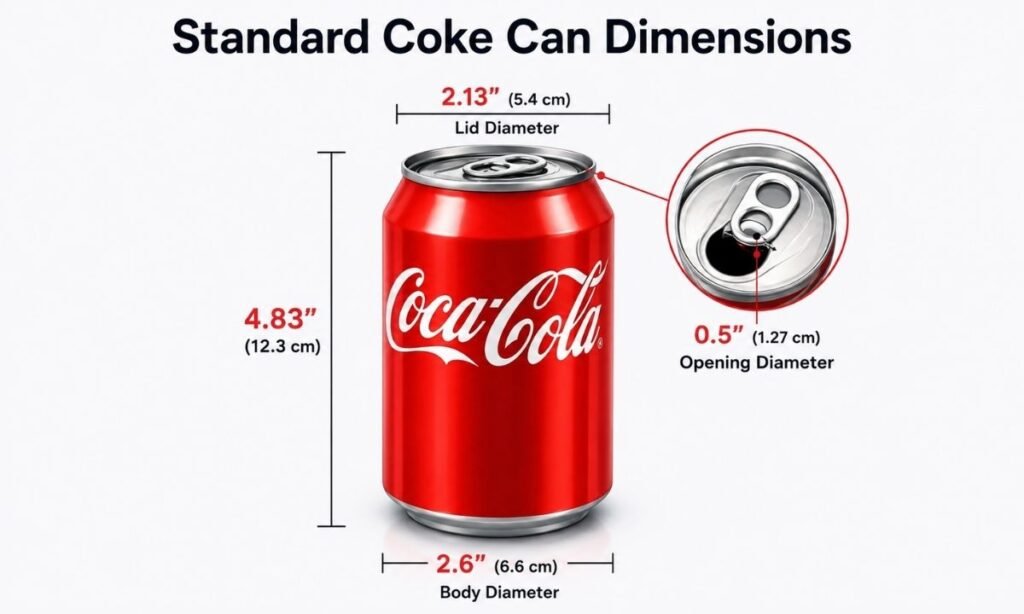
That narrowing isn’t cosmetic. It reduces the amount of aluminum needed for the lid, which cuts material costs across billions of cans a year.
Standard Coke Can Circumference
The circumference of a 12 oz can runs approximately 8.2 inches (20.8 cm), based on the 2.6 inch diameter. You get this by multiplying diameter by pi, so any can with the same width shares roughly the same circumference.
If you’ve ever wrapped a koozie or a custom label around a can and had it come up short, this is the number that actually matters, not the height.
Standard Coke Can Shape and Size
The cylindrical body isn’t a random design choice. A round shape spreads internal pressure from carbonation evenly across the walls, which lets manufacturers use thinner aluminum without the can bulging or splitting.
Modern cans use two piece construction: the body is stamped from a single aluminum sheet, and the lid gets attached separately after filling. This method wastes less metal than older three piece steel cans and holds up better during shipping and stacking.
Coke Can Sizes and Dimensions Chart
Coca-Cola sells more than just the classic 12 oz can. Depending on where you shop, you’ll find mini cans, tall boys, and large formats sitting on the same shelf. Here’s a closer chart covering can height, diameter, and volume across the full range.
| Size | Volume | Height (in / cm) | Diameter (in / cm) |
| Mini | 7.5 oz / 222 ml | 3.8 / 9.7 | 2.1 / 5.3 |
| Standard | 12 fl oz / 355 ml | 4.83 / 12.3 | 2.6 / 6.6 |
| Tall boy | 16 oz / 473 ml | 6.2 / 15.7 | 2.6 to 2.7 / 6.6 to 6.9 |
| Large | 20 oz / 591 ml | 7.5 / 19.0 | 2.87 / 7.3 |
| King | 24 oz / 710 ml | 8.0 to 8.5 / 20.3 to 21.6 | 2.87 / 7.3 |
7.5 oz Mini Coke Can
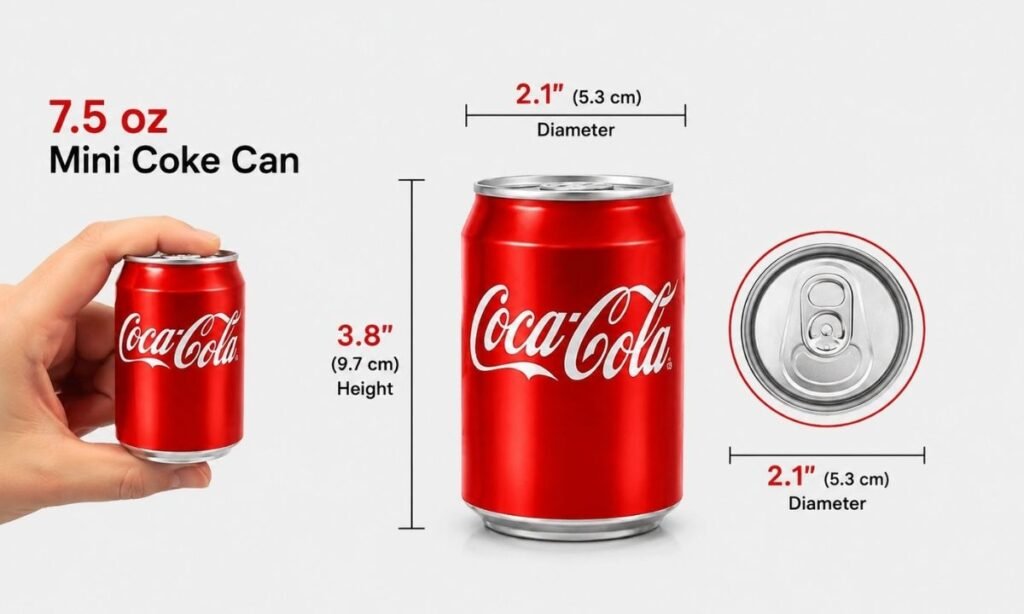
The mini Coke can stands about 3.8 inches tall (9.7 cm) with a diameter around 2.1 inches (5.3 cm), holding 222 ml of soda. It launched in the late 2000s as consumer preferences shifted toward portion control, and it still shows up in variety packs, lunch boxes, and vending machines where a full 12 oz feels like too much.
12 oz Coke Can
This is the reference point for every measurement in this guide. At 4.83 inches tall and 2.6 inches wide, holding 355 ml, it’s the version you’ll find in nearly every gas station, grocery store, and restaurant fountain alternative across the country.
16 oz Coke Can
Often called a tall boy, the 16 oz can reaches roughly 6.2 inches tall (15.7 cm) while keeping a diameter close to the standard can at 2.6 to 2.7 inches. That shared width means tall boys often fit the same shelving and vending slots as regular cans, just with more height clearance needed.
This format has grown fast in convenience stores because it gives shoppers more soda per purchase without needing to buy two cans.
20 oz and 24 oz Cans
The 20 oz can measures about 7.5 inches tall with a diameter near 2.87 inches, while the 24 oz king can runs slightly taller, somewhere between 8 and 8.5 inches, depending on the manufacturer’s exact mold.
These larger sizes aren’t as tightly standardized across the industry as the 12 oz format, so treat these figures as a close estimate rather than an exact spec. You’ll usually spot them at gas stations and single-serve coolers rather than in multipacks.
Slim Coke Can Dimensions
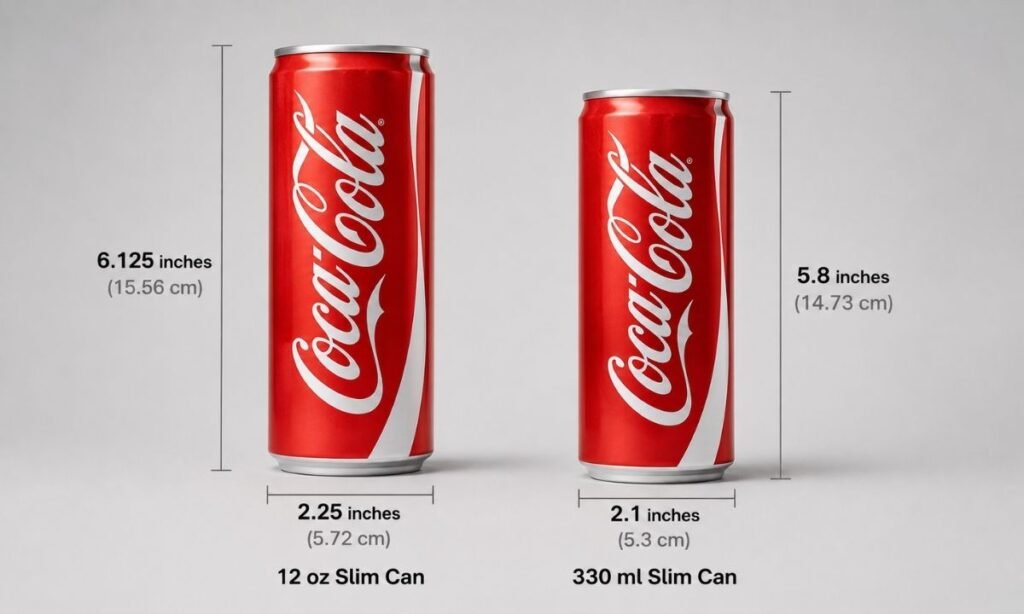
Slim cans give Coca-Cola a way to package the same 12 oz volume in a narrower, taller shape. Diet Coke and several premium product lines use this format because the elongated silhouette stands out on a crowded shelf and gives designers more vertical space for branding.
Slim Coke Can Height and Diameter
A slim Coke can measures roughly 6.1 to 6.6 inches tall (15.5 to 16.8 cm) with a diameter close to 2.25 inches (5.7 cm).
That’s the same 355 ml as a standard can, just stretched into a thinner, taller shape. The circumference drops to around 7.2 inches (18.2 cm), noticeably less than the standard can’s 8.2 inches.
How Slim Cans Differ From Standard Cans
The difference comes down to proportion, not volume. Here’s a side by side look.
| Measurement | Standard Can | Slim Can |
| Height | 4.83 in | ~6.1 to 6.6 in |
| Diameter | 2.6 in | ~2.25 in |
| Circumference | ~8.2 in | ~7.2 in |
| Volume | 355 ml | 355 ml |
That narrower diameter matters more than people expect. Standard car cup holders are built around the 2.6 inch width, so a slim can often rattles around unless the holder has an adjustable insert.
If you’ve ever set a Red Bull in a cup holder and noticed it wobble, you already know the feeling. Red Bull’s 8.4 oz can uses a similarly narrow profile, which is why slim soda cans and energy drink cans often share that same loose fit.
International Coke Can Dimensions
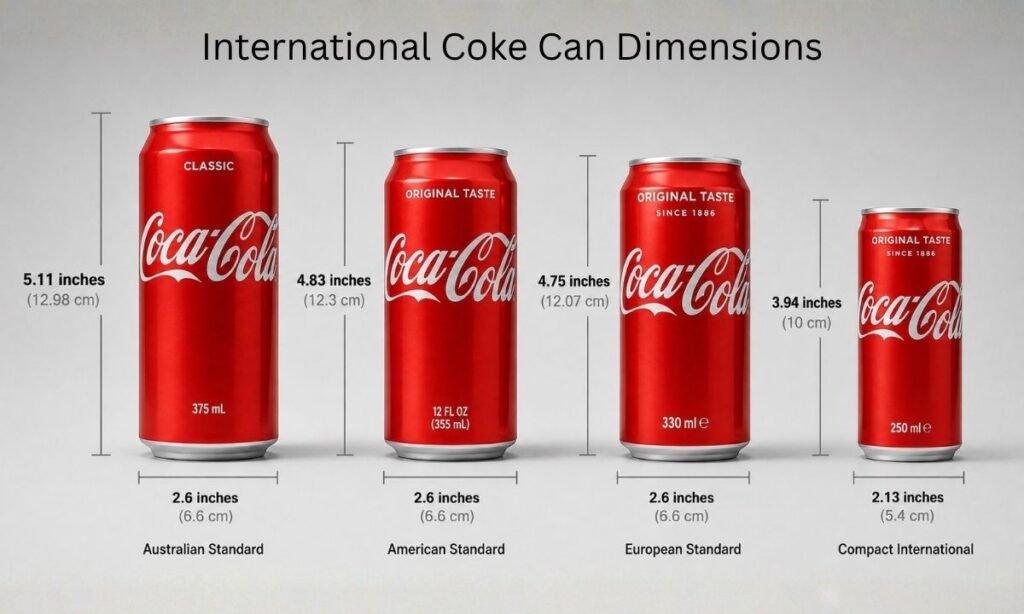
American standard cans don’t match what you’ll find overseas. The United States settled on 12 fluid ounces early in Coca-Cola’s history, while most other countries built their can sizes around round metric numbers instead.
250 ml Coke Can Dimensions
The 250 ml can, common in parts of Asia and some European markets, stands approximately 4.4 inches tall (11.2 cm) while keeping the familiar 2.6 inch diameter. This smaller format works well for single-serving vending machines and quick, on the go purchases.
330 ml Coke Can Dimensions
The European standard can holds 330 ml and measures roughly 4.75 to 4.83 inches tall (11.5 to 12.3 cm), with the same 2.6 inch diameter as the American can. Europe’s metric system made 330 ml a cleaner number to work with than converting directly from 12 fluid ounces.
375 ml Coke Can Dimensions
Australia uses a 375 ml can as its everyday standard, reaching about 5.11 inches tall (12.9 cm) while keeping that same 2.6 inch diameter across the body. This size reflects local drinking habits more than any technical requirement, since the diameter stays locked to the global manufacturing standard regardless of region.
Here’s how the three international formats stack up next to the American can.
| Region | Volume | Height (approx) | Diameter |
| United States | 355 ml (12 oz) | 4.83 in / 12.3 cm | 2.6 in / 6.6 cm |
| Europe | 330 ml | 4.75 to 4.83 in / 11.5 to 12.3 cm | 2.6 in / 6.6 cm |
| Australia | 375 ml | 5.11 in / 12.9 cm | 2.6 in / 6.6 cm |
| Asia (select markets) | 250 ml | ~4.4 in / 11.2 cm | 2.6 in / 6.6 cm |
Notice the pattern. The diameter barely moves. Only the height shifts to match local volume preferences, which keeps global can dimensions compatible with shared manufacturing equipment.
Coke Can Dimensions in Inches and CM
Some readers think in inches, others in centimeters, so here’s the standard 12 oz can broken down both ways.
12 oz Coke Can Dimensions in Inches
- Height: 4.83 inches
- Diameter: 2.6 inches
- Lid diameter: 2.13 inches
- Circumference: approximately 8.2 inches
12 oz Coke Can Dimensions in CM
- Height: 12.3 cm
- Diameter: 6.6 cm
- Lid diameter: 5.4 cm
- Circumference: approximately 20.8 cm
These figures stay consistent across most manufacturing sources, since aluminum can tooling gets standardized to avoid costly retrofits at bottling plants.
Coke Can Circumference, Opening, and Lid Size
Beyond height and width, two other measurements matter for anyone dealing with can packaging, labeling, or koozie fit: circumference and can opening size.
How to Measure Coke Can Circumference
You can measure circumference two ways. Wrap a flexible tape measure around the can’s widest point and read the number directly, or calculate it by multiplying the diameter by pi (roughly 3.14).
For a standard 2.6 inch diameter can, that math gives you approximately 8.2 inches. This method works for any cylindrical container, not just soda cans, so it’s a handy trick for koozies, labels, or custom packaging projects.
Coke Can Opening and 202 End
The beverage industry uses end size codes to describe lid dimensions, and Coca-Cola’s standard 12 oz can uses what’s known as a 202 end. That code refers to a lid opening of approximately 2.125 inches, which fits the necked in top of the standard can body. Some specialty formats use a slightly different 204 end instead.
These codes come from can manufacturers like Crown Holdings and Ball Corporation, and they exist so that lid tooling stays interchangeable across different beverage brands using similar aluminum can bodies.
Practical Uses of Coke Can Measurements
Knowing exact can dimensions isn’t just trivia. It solves real, everyday problems.
Cup Holder Compatibility
Most car cup holders are built around the standard 2.6 inch diameter, so a 12 oz, 16 oz, or mini can usually drops in without trouble. Slim cans, at roughly 2.25 inches wide, are the exception. Older vehicles without adjustable holder inserts will let a slim can lean or slide, while newer cars with rubber grips or tension clips handle the narrower width just fine.
Refrigerator and Cooler Storage
A standard 12 oz can needs at least 5 inches of vertical clearance to stand upright on a fridge shelf, while a tall boy needs closer to 6.5 inches. This matters more than people think when organizing a cooler for a party or road trip.
Fitting one row of tall boys instead of standard cans can mean stacking two shelves instead of one, which cuts your total storage capacity in half. If you’re planning transportation logistics for an event, checking height clearance before loading a cooler saves a lot of last minute rearranging.
Shelf Space and Retail Planning
Retailers factor can diameter directly into shelf width calculations. Since most Coca-Cola cans share that 2.6 inch body width, stores can swap between mini, standard, and tall boy formats on the same shelf track without redesigning the display. This shared diameter is a quiet but important part of why grocery store cooler doors look so uniform despite carrying a dozen different can sizes.
Coke Can vs Other Beverage Cans
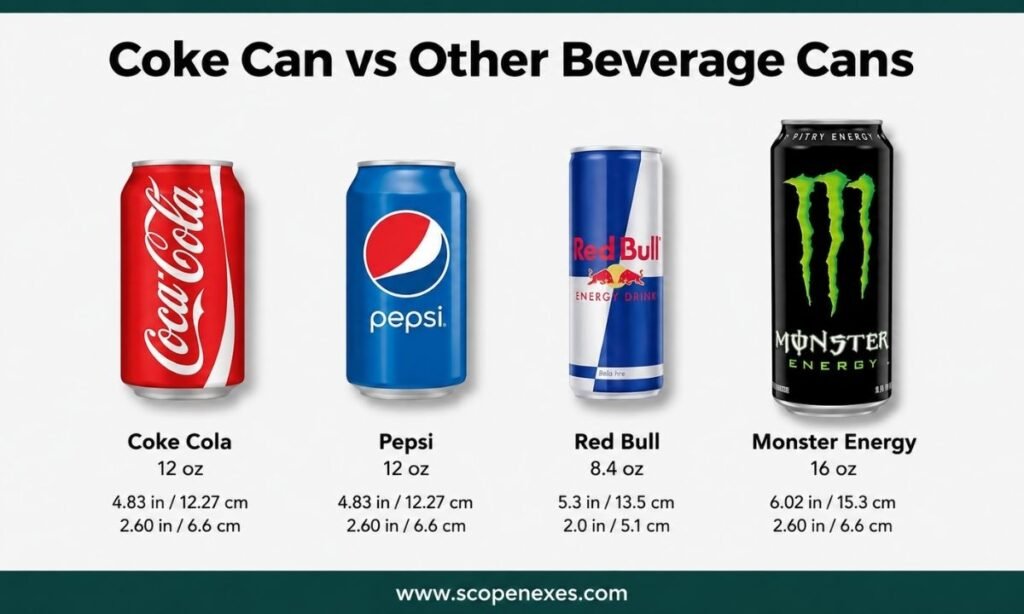
How does Coca-Cola’s can size compare to its biggest rivals and the energy drink category that’s grown so fast in the last decade?
Coke vs Pepsi Can Dimensions
For all practical purposes, Coke and Pepsi’s standard 12 oz cans are identical. Both measure 4.83 inches tall and 2.6 inches in diameter, since both companies rely on the same aluminum can manufacturers and the same industry wide 202 end lid standard. If you set one next to the other, you won’t spot a measurable difference.
Coke vs Energy Drink Can Dimensions
Energy drinks split into two camps. Monster Energy uses a can close to Coke’s standard 2.6 inch diameter, which is part of why a Monster can feels bulkier in hand despite holding a different beverage entirely.
Red Bull goes the other direction, using a slim, narrow can around 2 inches in diameter that shares more in common with Coke’s slim can format than its standard one. This split explains why energy drink cans feel so different from one brand to the next, even when they hold a similar volume.
| Brand | Format | Diameter | Feel |
| Coca-Cola | Standard 12 oz | 2.6 in | Familiar, wide grip |
| Pepsi | Standard 12 oz | 2.6 in | Nearly identical to Coke |
| Monster Energy | Standard | ~2.6 in | Bulkier due to height |
| Red Bull | Slim | ~2.1 in | Narrow, similar to Coke’s slim can |
Frequently Asked Questions
What Are the Dimensions of a Standard Coke Can?
A standard Coke can measures 4.83 inches tall and 2.6 inches in diameter, holding 355 ml of soda total.
How Tall Is a 12 oz Coke Can?
A 12 oz Coke can stands 4.83 inches tall, or 12.3 centimeters, matching the standard American can height.
What Is the Diameter of a Coke Can?
A standard Coke can has a diameter of 2.6 inches, or 6.6 centimeters, across nearly every American format sold.
What Are the Dimensions of a 330 ml Coke Can?
A 330 ml Coke can stands roughly 4.75 to 4.83 inches tall with the same 2.6 inch standard diameter.
How Tall Is a 250 ml Coke Can?
A 250 ml Coke can stands approximately 4.4 inches tall, or 11.2 centimeters, while keeping the standard 2.6 inch diameter.
Conclusion
Coke can dimensions aren’t random numbers stamped on a factory line. They’re the result of decades of engineering tweaks and shifting consumer demand, all working together.
The standard 12 oz can, sitting at 4.83 by 2.6 inches, still sets the benchmark across America, even as slim cans, mini cans, and international sizes carve out their own space on the shelf. Once you know these measurements, storage, shopping, and everyday use all get a little easier.